Motel vs hotel: doors, corridors and what you actually get
The short answer
A motel is a lodging built for drivers: usually one or two storeys, with room doors opening onto the parking lot or an outdoor walkway. A hotel puts rooms along interior corridors reached through a lobby, and usually offers more services. Economy brands such as Days Inn run both kinds of building, so check the property itself.
Independent guide. Not affiliated with, endorsed by or sponsored by Days Inn or Wyndham Hotels & Resorts. We take no bookings.
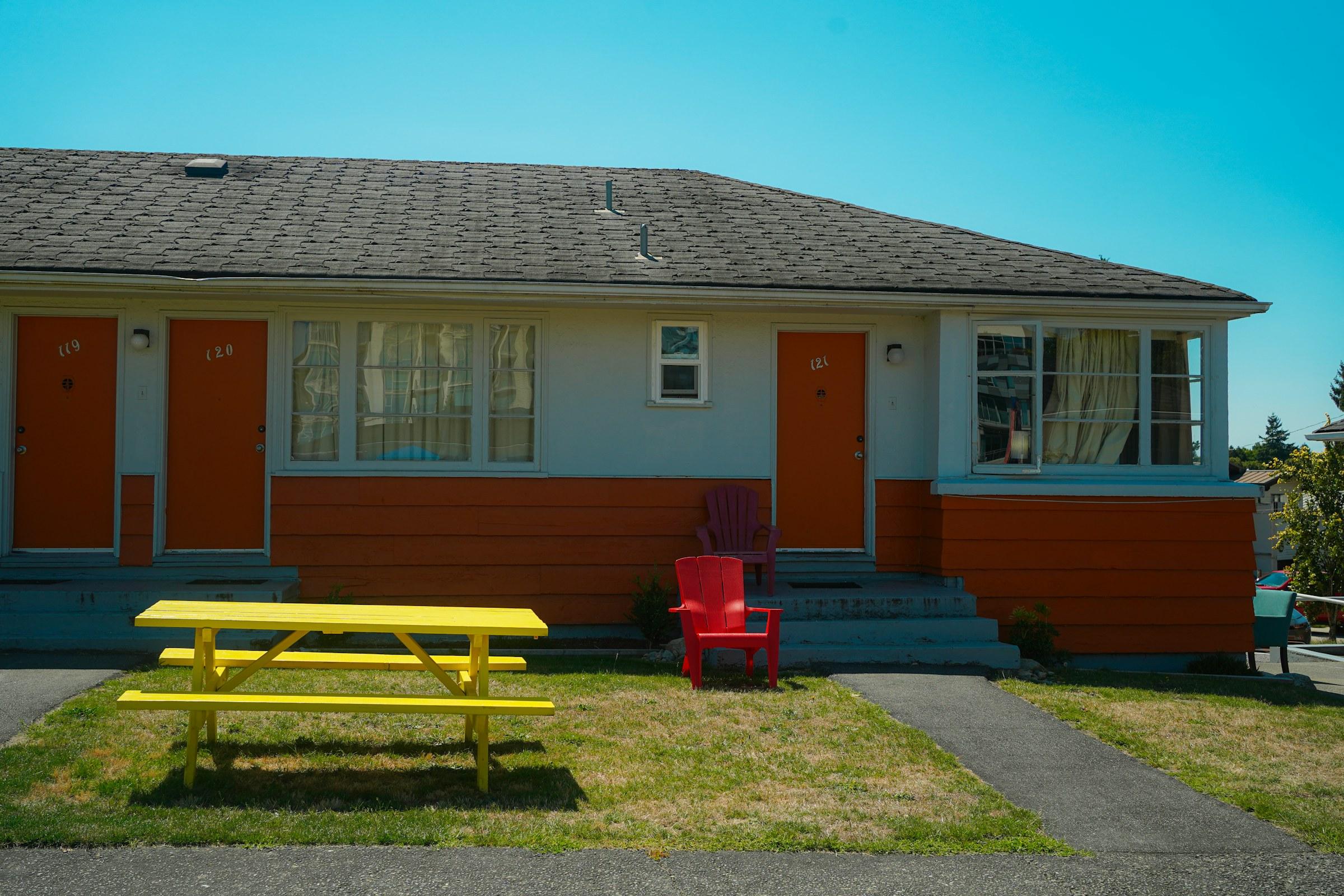
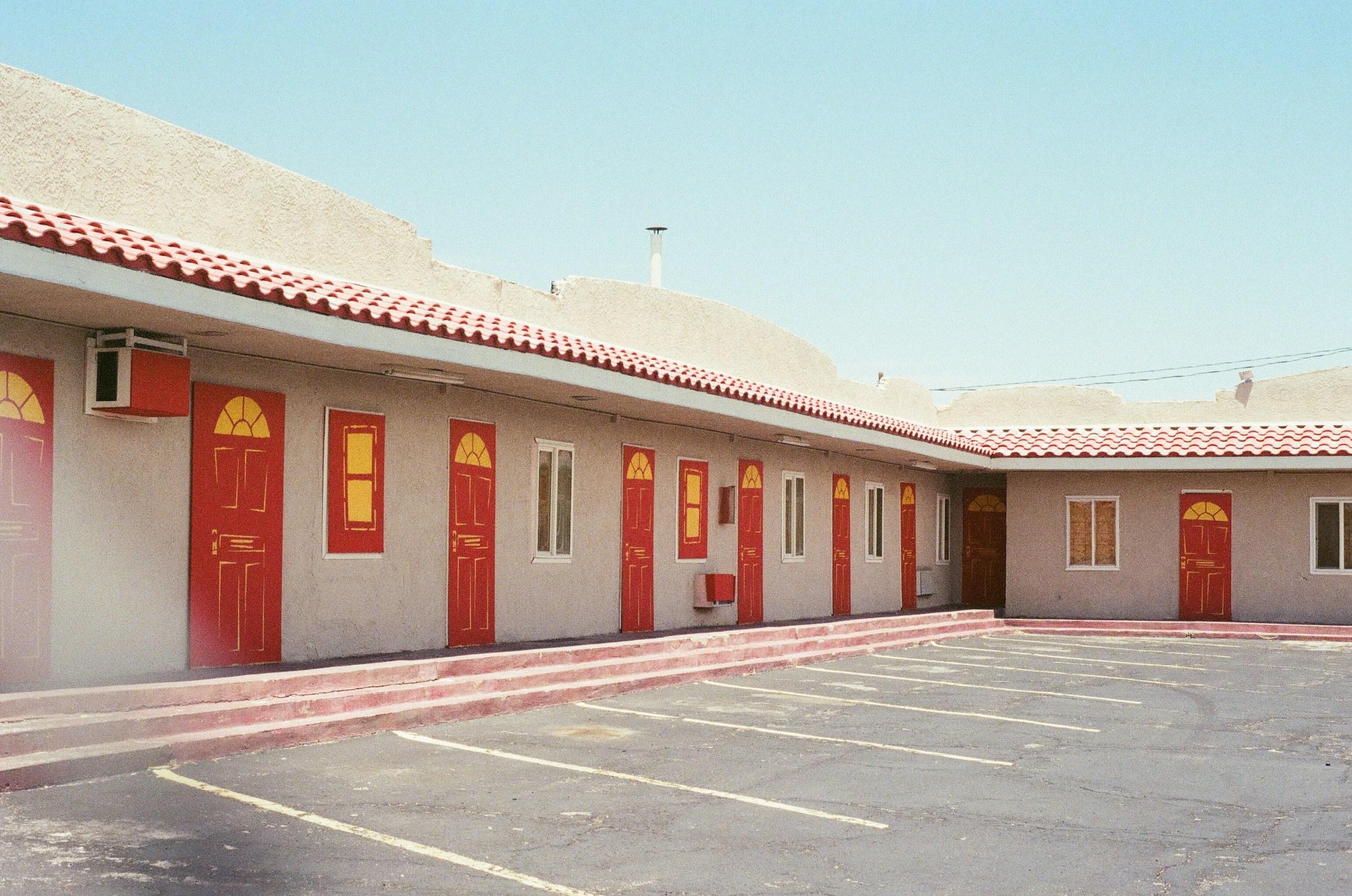
Motel exterior corridor
Park, walk a few steps, open your door.
Hotel interior corridor
Lobby, lift or stairs, then an inside hallway.
What is the difference between a motel and a hotel?
The core difference is access. At a motel you park near your room and walk straight to its outside door; at a hotel you go through a lobby and along an indoor hallway. Motels tend to be low-rise, near highways and simpler in service. Hotels tend to be taller, in towns or near attractions, with more staff and amenities.
Those are tendencies, not rules. Plenty of motels have pools and breakfast; plenty of small hotels have neither. What you really want to know is the layout (exterior or interior corridor), the services you need, and the property’s condition.
Where does the word motel come from?
Motel blends motor and hotel. Merriam-Webster gives 1925 as its first known use, the decade when car ownership spread and drivers needed somewhere to stop that was not a downtown hotel. The roadside motor courts and motels that followed put the car right outside the room, which is still the motel’s defining feature.
Merriam-Webster The motel boom of the post-war decades is also where today’s economy chains began: Days Inn was founded in 1970 by a developer frustrated by the roadside rooms he found on a family trip. Wikipedia: Days Inn
How do motels and hotels compare, point by point?
The table sets out the usual pattern for each feature. Treat every row as typical, not guaranteed: the brand, the building and the owner all change the picture. Where a row matters to you, such as a ground-floor room or a staffed desk at midnight, confirm it with the specific property before you book.
| Feature | Motel (typical) | Hotel (typical) |
|---|---|---|
| Room access | Exterior door onto the lot or a walkway | Interior hallway via a lobby |
| Height | One or two storeys | Often several storeys, with lifts |
| Parking | Beside or near your door, usually free | A lot or garage; may be paid in cities |
| Location | Highways, exits, edges of towns | Town centres, airports, attractions |
| Services | Front desk, sometimes breakfast and a pool | Often more: restaurant, gym, meeting rooms |
| Best for | Road trips, late arrivals, unloading a car | Longer stays, city trips, more services |
Is Days Inn a motel or a hotel?
It can be either. Days Inn began as a motel brand, and many locations still have the drive-up, exterior-door layout. Wyndham presents the brand as hotels, and some Days Inn and Days Inn & Suites properties are multi-storey buildings with inside corridors. The property’s photos and description will tell you which one you are booking.
Wyndham’s brand letter talks about “locations” and amenities rather than a single building type, which fits a franchise brand made of many different properties. Wyndham: Days Inn letter More on the brand in what Days Inn is.
Should you choose a motel or a hotel?
On a road trip, a motel’s drive-up room is hard to beat for one night: you park, unload and leave early without crossing a lobby. For longer stays, city stays or travel without a car, a hotel’s interior corridor and extra services often suit better. Some travellers simply prefer an indoor hallway for comfort or peace of mind.
If you prefer a room that does not open onto the lot, ask for an upper-floor room or an interior-corridor property. AAA’s room-safety advice suggests asking for a room between the third and sixth floors where the building has them, away from ground level. AAA: room safety Our motel safety tips cover drive-up rooms specifically.
Frequently asked questions
Motel is a blend of motor and hotel. Merriam-Webster dates its first known use to 1925, when car travel was creating a new kind of roadside lodging where drivers parked beside their rooms. The Milestone Mo-Tel in San Luis Obispo, California, which opened that year, is often credited as the first to use the name.
Neither by definition. Hotels usually offer more services, such as a staffed lobby around the clock, restaurants or meeting rooms, and motels are usually simpler. But a well-kept, recently renovated motel can be more pleasant than a tired hotel. Judge the specific property by recent reviews, photos and its renovation date.
Traditionally an inn was a smaller lodging, often with food and drink, along a route. Today the word is mostly branding: many economy and midscale chains, Days Inn included, use inn in their names without being small or historic. Look at the property's layout and services rather than its name.
Usually, because they offer fewer services and often sit on cheaper land near highways. But location, season, demand and the property's condition can matter more than the label. A motel in a busy resort town in summer can cost more than a city hotel on a quiet night, so compare total prices.
Sources
- Motel (dictionary entry)Merriam-Webster
- Milestone Mo-Tel (Motel Inn), San Luis ObispoWikipedia
- Days InnWikipedia
- A Word from Days Inn (brand letter)Wyndham Hotels & Resorts
- Rest easier with these 7 hotel room safety tips (Sep 17, 2025)AAA Club Alliance
Facts on this page were checked on November 26, 2026 against the pages above. Amenities, policies, rates and programs change and vary by property, so confirm with the hotel or brand before you book. Mile & Key is independent and not affiliated with Days Inn or Wyndham Hotels & Resorts. Disclaimer · How we check facts